
Citrus psylla in lemon, lime and sweet orange: identify, prevent and stop citrus greening
· By AgriVruddhi
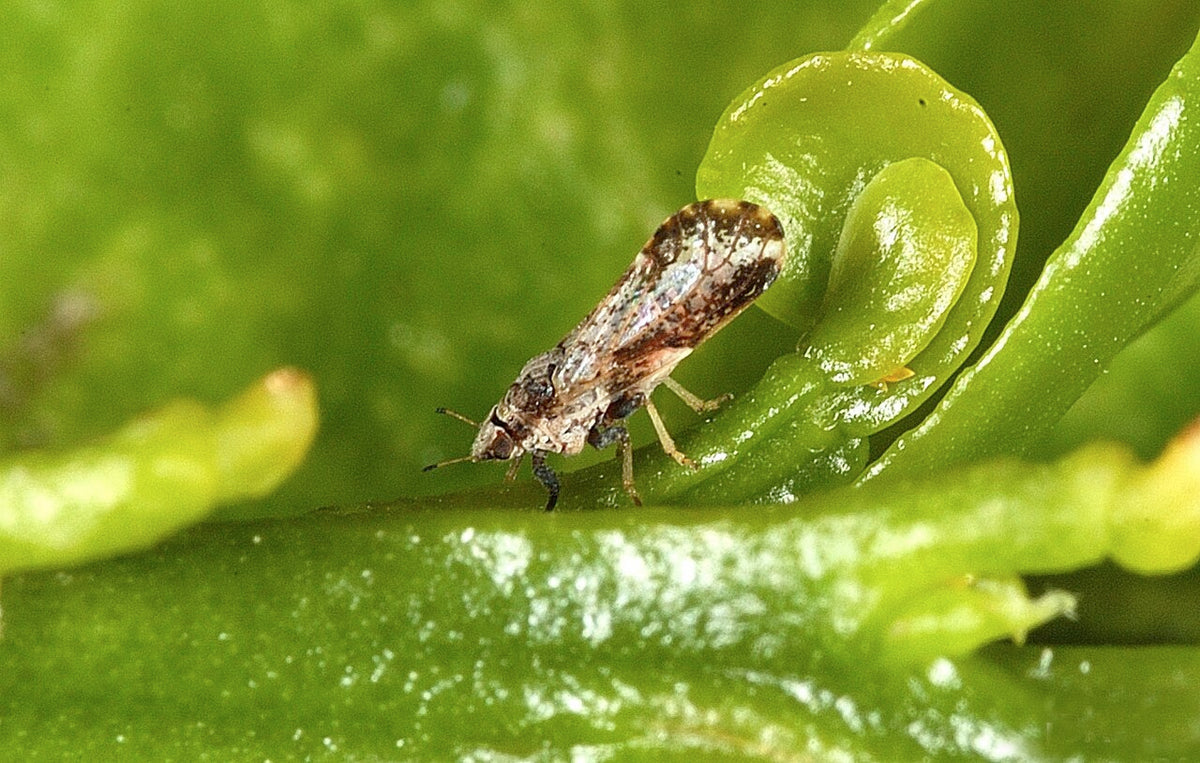
Photo at the top: An adult psylla feeding on a young citrus leaf, head down and tail up, Photo: David Hall, USDA, Public domain
Quick answer
Citrus psylla (Diaphorina citri) is a tiny brown insect that sucks sap from the new shoots of lime, lemon, sweet orange and mandarin. Young leaves twist and dry, and black sooty mould grows on its honeydew. Worse, it spreads citrus greening, a disease no spray can cure. Check every new flush, cut out infested shoots and protect its natural enemies.
How to identify citrus psylla
This pest is called nimbu ki silla (नींबू की सिल्ला) in Hindi and nimma sylla (నిమ్మ సైల్లా) in Telugu. In English it is also called the Asian citrus psyllid. It lives on the flush, which means the soft new shoots and tender leaves at the tips of the branches. Look there first, not on old, hard leaves.
- Adult: a small insect about the size of an aphid, only a few millimetres long. The body is mottled brown and grey, the eyes are red, and the wings have a brown band along the edge with a clear gap near the back. When it feeds, it keeps its head down on the leaf and lifts its back end at an angle of about 45 degrees, like a tiny thorn standing on the leaf. No other citrus pest sits like this.
- Egg: very small, almond shaped and yellow to orange. Eggs are laid in the folds of new leaves and on the tips of new shoots.
- Nymph (young stage): flat, wingless and yellow, orange or brown. Nymphs crowd together on tender shoots, buds and young leaves. They give out white, waxy threads that curl and often end in a small ball. These white curls on new shoots are a clear sign of this pest.

Damage signs
Both the adults and the nymphs suck sap and put a toxic saliva into the plant. The nymphs do more harm, as TNAU (Tamil Nadu Agricultural University) notes. Look for these signs on the new flush:
- New leaves twist and curl, and when they open fully they may have a notch on the edge.
- Shoots stay short, and the tip of a branch can look like a dense broom of small leaves.
- If many nymphs feed early, the new flush dries up and dies.
- Sticky honeydew on the leaves, with black sooty mould growing on it.
- White waxy curls and threads on young stems and leaves.

Look-alikes and how to tell them apart
- Aphids: soft, pear-shaped, green or black, and they sit flat on the shoot. They also curl new citrus leaves and leave honeydew, but they do not tilt their bodies or make curly white wax. See our guide to identifying and controlling aphids.
- Citrus black fly and whiteflies: the adults fly up when you shake a branch, and the young stages are fixed flat under older leaves. See how to identify whitefly and its young stages.
- Mealybugs: slow, oval insects covered in white cotton-like powder, often on twigs and fruit. Their wax is a fluffy coat, not separate curly threads. See our mealybug identification and control guide.
- Citrus leaf miner: a small grub that makes silvery, winding tunnels inside young leaves. You see tunnels, not insects sitting on the leaf.
- Thrips: very thin, fast-moving insects that leave silvery or brown scars on leaves and fruit. Read more in our thrips identification guide.
Life cycle and when it attacks
Psylla has three stages: egg, nymph and adult. A female lays her eggs only on soft new growth, and over her life she can lay several hundred eggs. The nymph that hatches cannot feed on hard, mature leaves. It feeds on the same tender flush, moults (sheds its skin) four times as it grows, and then becomes a winged adult. Adults usually live one to two months, as the University of California IPM programme notes.
This means the pest builds up whenever the tree puts out new flush. With no flush, the females have nowhere to lay eggs. Citrus trees flush a few times a year, and young trees and lemon trees flush more often in warm weather.
The NIPHM (National Institute of Plant Health Management) citrus IPM package says summer and the rainy season favour this pest. In Telangana and Andhra Pradesh, where sweet orange and acid lime are major orchard crops, keep a close watch on every flush from summer through the monsoon.
Crops it attacks
Acid lime and lemon: attacked on the new shoots each time the tree flushes, from the young-plant stage onward. Lemon trees put out new shoots through the warm months, so the pest can find food on them for much of the year.
Sweet orange (mosambi, batavia) and mandarin (santra): attacked at each new flush. Heavy feeding on the flush means fewer healthy shoots to carry flowers and fruit.
Young orchards and nursery plants: trees under about five years old suffer most when new growth dies, because their frame is still growing. A nursery plant that carries psylla or greening can bring the problem into a new orchard.
Curry leaf and orange jasmine: these plants belong to the same family as citrus, and the pest also breeds on them. Check curry leaf plants near your orchard or home too.
Citrus greening: why psylla is dangerous
The sap loss from psylla hurts the flush, but the real danger is citrus greening. This disease is also called huanglongbing or HLB. It is caused by a bacterium that lives in the tree's food channels. When psylla feeds on an infected tree, it picks up the bacterium. Later it carries it to healthy trees as it feeds. Young psylla can pick up the bacterium from a newly infected tree within a few weeks, long before that tree shows any signs.
Signs of greening
- Leaves on one branch or one side of the tree turn yellow first.
- The yellow is blotchy and uneven: one half of the leaf is greener than the other, or green patches sit inside yellow areas.
- Heavy leaf fall, small leaves that point upward, and twigs that die back from the tip.
- Fruit stays small, lopsided and partly green, the juice tastes bitter, and the seeds are dark and poorly formed. Fruit often drops early.
Zinc and other nutrient shortages also make citrus leaves yellow. But in a nutrient shortage the pattern is usually even on both sides of the middle vein. If you are not sure, read our guide to zinc deficiency symptoms and ask your horticulture officer to check the tree.
No spray cures greening
There is no cure for a tree with greening. No spray, fertiliser or tonic will make it healthy again. Signs can take two years or more to show after infection, so a tree can spread the disease before you notice it. The only protection is to keep psylla numbers low, plant healthy stock and remove infected trees so they do not feed the disease to the rest of the orchard.
When to act (economic threshold)
An economic threshold is the pest level at which control starts to pay for itself. We could not confirm a threshold for this pest from a recognised Indian public source, so we do not give a number here. Because psylla spreads greening, do not wait for large numbers.
Instead, check the orchard each time new flush appears, about once a week while shoots are soft. Walk around each tree and look at the young leaves for the tilted adults, the white waxy curls of nymphs, honeydew and twisted leaves. A hand lens helps you see the eggs and small nymphs. Yellow sticky traps hung in the trees can catch adults and show you when they arrive. This is how monitoring teams in California, USA, track the pest. TNAU advises that control be timed to the flush growth periods.
Citrus psylla control without chemicals
- Plant healthy stock: buy grafted plants from a government or certified nursery that uses disease-free bud wood. The NIPHM package names certified, pathogen-free bud wood as a key step against greening.
- Cut out infested shoots: both TNAU and NIPHM advise collecting and destroying damaged plant parts. Prune shoots that carry many nymphs and burn or bury them away from the orchard.
- Remove greening trees: once your horticulture officer confirms greening, pull out the tree. A sick tree left standing keeps feeding the disease to psylla and to nearby trees.
- Watch nearby host plants: curry leaf and orange jasmine near the orchard can carry the pest. Check them during each flush too.
- Control ants: ants feed on the honeydew and guard the nymphs from their natural enemies. Keep ants off the trunk.
- Protect natural enemies: NIPHM lists two small parasitic wasps, Tamarixia radiata and Diaphorencyrtus aligarhensis, that kill psylla nymphs. Ladybird beetles, lacewings and hover fly larvae also eat them. Avoid sprays that are not needed, so these helpers survive.
- Grow flowers for helpers: NIPHM suggests flowering plants of the carrot and sunflower families, buckwheat and alfalfa near the orchard. They give food and shelter to lacewings, hover flies and other natural enemies.
- Do not move infected material: never take bud wood, cuttings or plants from an orchard where greening is known.
If you need to spray
None of the products in our store lists citrus psylla on citrus on its official label, so we cannot suggest one here. Ask your local agriculture or horticulture officer, or your nearest KVK (Krishi Vigyan Kendra), for a product labelled for this pest on your crop. Use the dose, water volume and waiting period printed on that label.
When you do spray, a few points help:
- Time the spray to the new flush, when eggs and nymphs are on the soft shoots. Cover the young shoots and tender leaves well.
- Use one product at a time. Do not mix products in one tank.
- Do not use the same chemical group again and again. Ask the officer for a second product from a different group, and change groups from one spray to the next. This slows down resistance.
- Keep up the pruning, ant control and nursery hygiene. Sprays alone do not stop greening.
Safety
Read the label and leaflet before use. Wear gloves, a mask, long sleeves and boots while you mix and spray, and wash well afterwards. Do not spray against the wind. Many insecticides harm honeybees, so avoid spraying when the trees are in flower and bees are working. Follow the waiting period on the label before you pick fruit. Keep pesticides locked away from children and animals.
Frequently asked questions
What is citrus psylla (Asian citrus psyllid)?
It is a small sap-sucking insect, Diaphorina citri, that lives on the new shoots of citrus trees. It curls and dries young leaves and causes sooty mould. Most important, it spreads the citrus greening disease from tree to tree.
Why are the new leaves on my lemon tree curling?
Psylla, aphids, citrus leaf miner and thrips can all curl new citrus leaves. Look closely at the curled shoot. Tilted brown insects and curly white wax mean psylla. Silvery tunnels inside the leaf mean leaf miner. Soft green or black insects sitting flat mean aphids.
What are the white curly threads on young lime shoots?
These are waxy threads made by psylla nymphs. They help the nymph push away its sticky waste. If you see them, look for the orange or brown nymphs underneath and act on that flush.
Can a tree with citrus greening be cured?
No. Greening is caused by a bacterium inside the tree, and no spray or fertiliser cures it. Remove the infected tree once it is confirmed, and keep psylla low so the disease does not reach your other trees.
Does citrus psylla attack curry leaf?
Yes. Curry leaf belongs to the same plant family as citrus, and the pest can breed on it. Curry leaf plants near an orchard can keep psylla numbers up, so check them too.
Related reading
- Aphid insecticide guide: control aphids in cotton, chilli and vegetables
- Mealybug in cotton, papaya and mango: identify and control
- Whitefly insecticide guide: control whitefly in cotton, brinjal, okra
- Thrips insecticide guide: control thrips in chilli, cotton and onion
- Zinc deficiency signs and correction in crops
- All insecticides
Sources
- Tamil Nadu Agricultural University, TNAU Agritech Portal: Pests of citrus: citrus psyllid
- National Institute of Plant Health Management (NIPHM), Government of India: AESA based IPM package for citrus
- University of California Statewide IPM Program: Asian citrus psyllid and huanglongbing disease
Like these farming tips? Add AgriVruddhi as a preferred source on Google
Back to Crop Health Guide