
Potassium deficiency in plants: symptoms, causes and how to correct it
· By AgriVruddhi
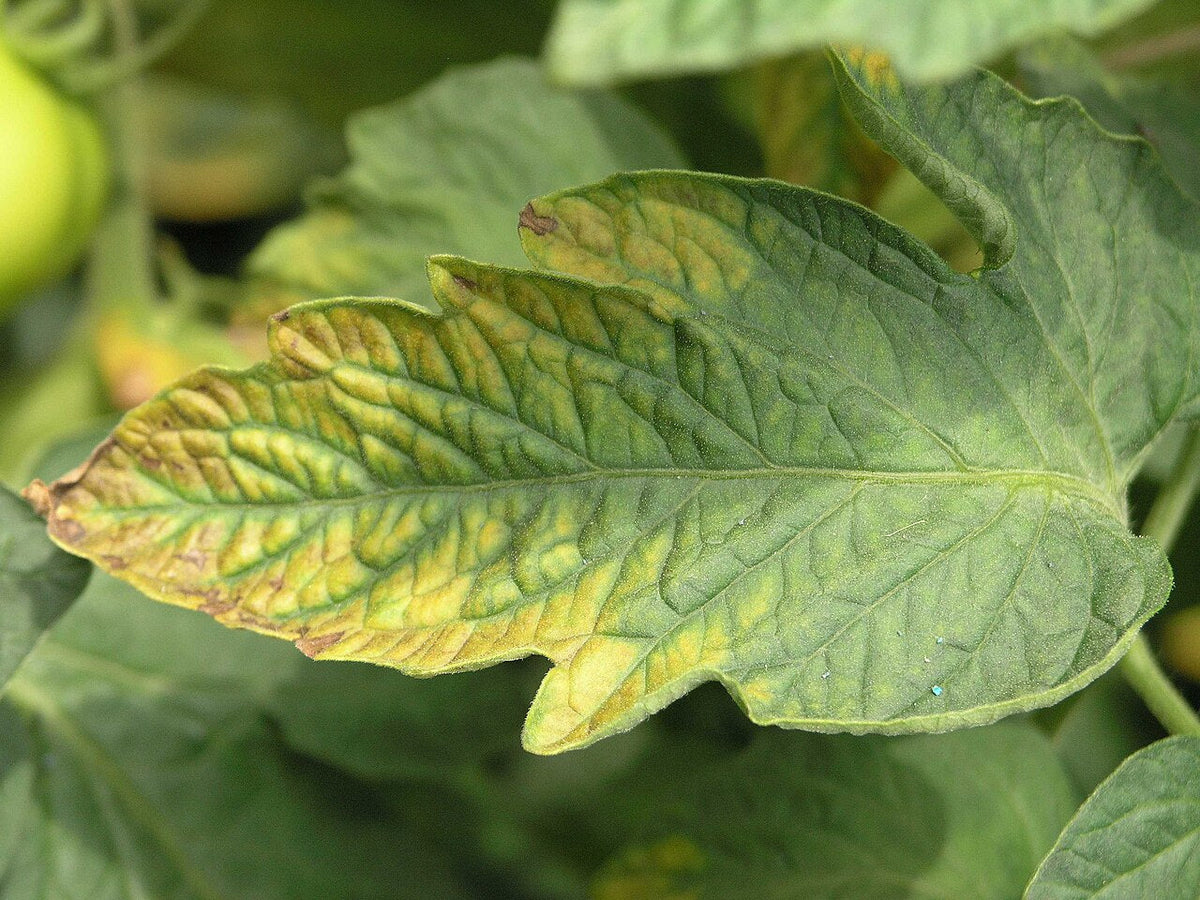
Photo at the top: Potassium deficiency in a tomato leaf: yellowing starts at the tip and edges, which later turn brown, while the base near the stalk stays green, Photo: Goldlocki, CC BY-SA 3.0
Quick answer
Potassium deficiency in plants means the crop does not get enough potassium (K), the nutrient farmers call potash. The edges and tips of older, lower leaves turn yellow, then brown and dry, as if scorched. Stems stay weak, and grains, bolls and fruits fill poorly. Confirm it with a soil test, then correct it with potash fertiliser and manure.
How to identify potassium deficiency in plants
Potassium deficiency is called potash ki kami (पोटाश की कमी) in Hindi and potash lopam (పొటాష్ లోపం) in Telugu. Potassium is one of the three main plant nutrients, with nitrogen and phosphorus. It is the "K" in NPK. The plant uses it to move water and sugar, to open and close the small pores on its leaves, to build strong stems and to fill grains, pods and fruits.
Potassium moves easily inside the plant. When the soil cannot supply enough, the plant takes potassium out of its old leaves and sends it to the new growth. So the signs start on the lower, older leaves, and the top of the plant stays green for longer.
Symptoms of potassium deficiency in plants
- Leaf edges first: the tip and the edges of older leaves turn yellow, while the middle of the leaf and the area near the main vein stay green.
- Scorch: the yellow edges then turn brown and dry, as if burnt. Small brown spots may appear near the edges. In a bad case the whole leaf dries.
- Leaf shape: leaves may curl, cup or droop, and stay small.
- Weak stems: stems are thin and weak, and cereals fall over (lodge) more easily.
- Poor filling: more empty grains in paddy, small bolls that do not open well in cotton, and fruits that ripen unevenly in tomato.
- Wilting: plants wilt faster in hot, dry weather, because potassium helps the plant hold water.
- More disease: a crop short of potassium is weaker against leaf spots and stem rots.

Look-alikes and how to tell them apart
Look at which leaves are hit first, and which part of the leaf.
- Nitrogen deficiency: also starts on older leaves, but the whole leaf turns pale yellow, veins too, and the whole plant looks pale. Potassium deficiency starts at the edges and tips and leaves the middle green. See our guide to nitrogen deficiency in plants and how to correct it.
- Magnesium deficiency: also on older leaves, but the yellow is between the veins, while the veins stay green, and the edges often stay green longer. Read our magnesium deficiency guide.
- Boron and calcium deficiency: these hit the young leaves, growing tips, flowers and fruits first, not the old leaves.
- Brown spot of paddy: a fungal disease (see our brown spot of rice guide) with round to oval brown spots, often with a grey centre, spread over the leaf. Potassium deficiency spots start at the tips and edges of older leaves. The two are often seen together on poor soils.
- Drought, salt or fertiliser burn: these can also scorch leaf edges. Check the water and what was applied recently.
- Normal ageing: near harvest, the lowest leaves dry naturally.
Causes of potassium deficiency
- Light soils: sandy, red and laterite soils often hold less potassium than black (cotton) soils. Potassium can also wash down below the roots in sandy soil after heavy rain or too much water.
- Years of cropping without potash: every harvest takes potassium out of the field. If only urea and DAP are applied, season after season, the soil runs short.
- Too much nitrogen and phosphorus: the IRRI Rice Knowledge Bank notes that heavy nitrogen or nitrogen-plus-phosphorus with too little potash is a common cause in paddy. A fast-growing crop needs more potassium.
- Straw taken away or burnt: most of the potassium a cereal crop takes up stays in the straw, not in the grain. Removing or burning the straw takes it out of the field.
- Poor roots: waterlogging, a hard pan, root pests or nematodes all reduce uptake, even when the soil has enough.
- Dry soil: potassium reaches roots through soil water. In a dry spell, uptake drops and signs show up.
- Heavy crop load: crops that carry many bolls, pods or fruits need a lot of potassium in a short time, at filling.
Symptoms of potassium deficiency by crop
Paddy (rice)
TNAU Agritech lists scorching of leaf margins and tips, starting on older leaves, and rusty brown spots on leaves and panicles. The IRRI Rice Knowledge Bank adds that plants can look dark green with yellowish brown leaf edges and short, drooping upper leaves. The crop lodges more easily and has more empty, unfilled grains. Signs often show in patches, hill by hill, not over the whole field.
Cotton
TNAU Agritech lists older leaves that turn yellow and droop, with scorched edges, and bolls that stay small, do not mature and fail to open. Leaves may turn bronze or reddish brown and fall early. In a crop with a heavy boll load, the signs can also appear on the upper leaves late in the season, because the bolls draw so much potassium.
Chilli
Older leaves turn yellow at the edges, then the edges turn brown and dry. Leaves may curl. Plants wilt quickly in the afternoon heat, flowers and young fruits drop, and fruits stay small with poorer colour.
Tomato
TNAU Agritech describes yellow spots at the leaf edges that spread over the leaf and turn brown, starting on the oldest leaves. The tips and edges scorch and turn upwards, and the plant stays stunted. Fruits often ripen unevenly, with green or yellow patches left on a red fruit (blotchy ripening).

Groundnut
The older leaflets turn yellow at the edges, and the edges later turn brown and dry. Plants grow slowly, and pods may fill poorly. Groundnut on light, sandy soils is more likely to show it.
When to act: soil test and leaf test
There is no pest-style "threshold" for a nutrient. By the time leaf edges scorch, the crop has already lost some yield. So the right time to act is before sowing, with a soil test.
- Soil test: under the Soil Health Card scheme you can get your soil tested through your agriculture department or Krishi Vigyan Kendra (KVK). The report shows the available potassium in your soil as low, medium or high, with a fertiliser plan for your crop.
- How to take a soil sample: from 8–10 spots across the field, in a zigzag, dig a V-shaped pit to plough depth (about 15 cm) and take a thin slice from one side. Mix all slices in a clean bucket and send about half a kilogram. Do not sample near bunds, trees, manure heaps or fertiliser bands.
- Leaf (plant) test: if the crop already shows signs, ask your KVK or state agricultural university whether a leaf test is available. It shows the nutrient level inside the plant and helps separate potassium from look-alikes.
- Check the roots: pull out a few plants from the affected patch. Black, short or rotten roots point to a water or root problem, which you must fix first.
Correcting it without chemical fertiliser
Organic sources add potassium slowly and improve the soil. They are good for the long term and work alongside potash fertiliser, not instead of it, when a crop is already short.
- Return the straw: do not burn paddy straw. Plough it in or compost it, so its potassium goes back to the soil. The IRRI Rice Knowledge Bank recommends putting straw back into the field.
- Farmyard manure (FYM) and compost: apply well-rotted manure before sowing or transplanting and mix it into the soil.
- Vermicompost: useful in vegetables and nurseries.
- Wood ash: contains potash. Spread a thin layer and mix it in. Keep it to small amounts.
- Potash-mobilising bacteria (KMB): a biofertiliser that helps release potassium already locked in the soil. Use a registered product and follow its label.
- Better drainage and roots: drain waterlogged patches and break a hard pan, so roots can take up what is in the soil.
How to correct potassium deficiency in plants with fertiliser
Soil application
Soil application is the main way to correct potassium. The most common potash fertiliser in India is muriate of potash (MOP, potassium chloride). Sulphate of potash (SOP, potassium sulphate) also supplies sulphur. NPK complex fertilisers supply some potassium too. Take the dose from your soil test report or your state's crop recommendation. For the right product and rate for your crop, ask your local agriculture officer or KVK.
- Apply at sowing or transplanting: potash is usually given as a basal dose and mixed into the soil.
- Split on light soils: on sandy soils, and in long crops such as cotton and chilli, local advice often splits potash between the basal dose and a later top dressing, so less washes away.
- Keep the balance: do not keep adding only urea and DAP. Too much potash, on the other hand, can reduce magnesium and calcium uptake.
- Keep the soil moist: potash works only when the soil has water around the roots.
Foliar spray
A foliar spray is a quick top-up, not a cure. A plant needs far more potassium than a leaf spray can supply, so keep the soil dose. TNAU Agritech gives these correction sprays:
| Crop | Spray (TNAU Agritech) | How often |
|---|---|---|
| Paddy | 1% potassium sulphate or 1% potassium chloride (10 g per litre of water) | Every 15 days until the signs go |
| Cotton | 1% potassium chloride (10 g per litre of water) | Once a week until the signs go |
| Tomato | 1% potassium sulphate | Three times, a week apart |
For chilli and groundnut, ask your KVK for the local advice. Spray in the early morning or evening, not in hot sun. A stronger mix can burn leaves. Old leaves that are already scorched will not turn green again. Judge the result on the new leaves.
Safety
- Store fertiliser in a dry place, away from food, animal feed, children and pesticides.
- Wear gloves while handling fertiliser, and wash your hands afterwards.
- Do not let fertiliser wash into ponds, canals or wells.
- Read the label and leaflet before use.
Frequently asked questions
What are the symptoms of potassium deficiency in plants?
The tips and edges of the older, lower leaves turn yellow, then brown and dry, while the middle of the leaf stays green. Stems are weak, plants wilt quickly in heat, and grains, bolls and fruits fill poorly.
Why do the old leaves show potassium deficiency first?
Potassium moves easily inside the plant. When the soil cannot supply enough, the plant pulls potassium from its old leaves and sends it to the new growth. So the old leaves suffer first.
Which fertiliser gives potassium to plants?
Muriate of potash (MOP) is the most common. Sulphate of potash (SOP) and NPK complex fertilisers also supply potassium. Manure, compost and crop straw add it slowly. Your soil test report tells you which to use and how much.
How do I know if it is potassium or nitrogen deficiency?
Both start on older leaves. With nitrogen, the whole leaf turns pale yellow, and the whole plant looks pale. With potassium, yellowing and browning start at the tips and edges, and the middle of the leaf stays green. A soil test confirms it.
Is potash needed on black soils?
Black soils often hold more potassium than red or sandy soils, but years of cropping can lower it. Do not guess. Get a soil test and follow the potash advice in the report.
Related reading
- Nitrogen deficiency in plants: symptoms, causes and how to correct it
- Boron deficiency in plants: symptoms, causes and how to correct it
- Magnesium deficiency in crops: yellowing between the veins of old leaves
- Brown spot of rice: spots on paddy leaves and grains
- All fertilizers
- Products for paddy
- Products for cotton
- Products for tomato
Sources
- TNAU Agritech Portal, Tamil Nadu Agricultural University: Rice: potassium deficiency
- TNAU Agritech Portal, Tamil Nadu Agricultural University: Cotton: potassium deficiency
- TNAU Agritech Portal, Tamil Nadu Agricultural University: Tomato: potassium deficiency
- IRRI Rice Knowledge Bank, International Rice Research Institute: Potassium (K) deficiency
- Soil Health Card scheme, Department of Agriculture and Farmers Welfare, Government of India: soilhealth.dac.gov.in
Like these farming tips? Add AgriVruddhi as a preferred source on Google
Back to Crop Health Guide