
Magnesium deficiency in plants: symptoms in cotton, groundnut and tomato
· By AgriVruddhi
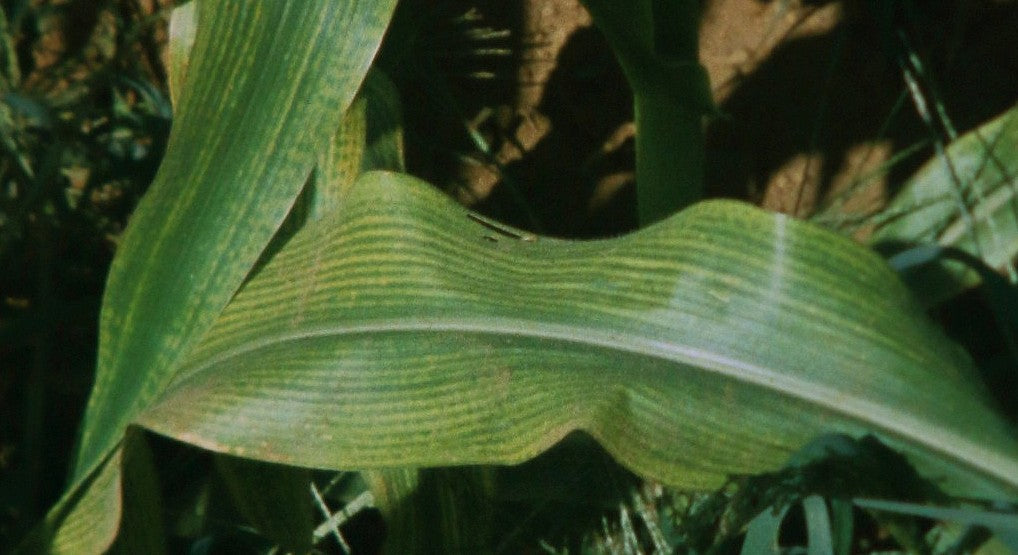
Photo at the top: Magnesium shortage in maize: yellow stripes between the green veins, Photo: Alandmanson, CC BY 4.0
Quick answer
Magnesium deficiency in plants shows first on the older, lower leaves. The leaf turns yellow between the veins while the veins stay green. Later the yellow parts can turn reddish-purple or brown, and leaves drop early. Confirm it with a soil or leaf test, add organic manure, and correct it with magnesium sulphate or dolomite as your test report advises.
Symptoms of magnesium deficiency in plants
In Hindi this problem is called मैग्नीशियम की कमी and in Telugu మెగ్నీషియం లోపం. Magnesium sits at the centre of chlorophyll, the green colour that the leaf uses to make food from sunlight. When magnesium runs short, the leaf loses its green colour and makes less food. Pods, bolls and fruits then fill poorly.
Magnesium deficiency in plants: symptoms by leaf age
Magnesium can move inside the plant. When the soil cannot supply enough, the plant pulls magnesium out of its old leaves and sends it to the new ones. That is why the signs start at the bottom of the plant and move up. This one fact is the easiest way to tell it apart from many other problems.
- Older, lower leaves first: the young leaves at the top usually stay green until the shortage is severe.
- Yellow between the veins: the veins stay dark green, so the leaf looks like a green net on a yellow background. On grass-like crops such as maize, this shows as yellow stripes between green lines.
- Colour change later: in many crops the yellow parts turn orange, red or purple, then brown and dry.
- Leaf drop: badly affected leaves fall early, so the lower part of the plant looks bare.
- Patches in the field: signs often show in patches where the soil is lighter, sandier or more acidic.

The photos show maize because clear, free photos of this problem in our main crops are rare. The pattern is the same idea in cotton, groundnut and tomato: yellow between green veins, on the older leaves first.
Magnesium deficiency in cotton
- The older and middle leaves turn yellow between the veins, then reddish-purple, while the veins stay green.
- Leaves can cup, as the TNAU Agritech Portal notes, and later dry and drop early.
- Signs are most common from flowering to boll filling, when the bolls pull a lot of magnesium from the leaves.
- Magnesium shortage is one cause of the "leaf reddening" seen in Bt cotton. It is not the only cause. Nitrogen shortage, long dry spells, waterlogging and cold nights can also turn cotton leaves red, so check the soil and the weather too.
Magnesium deficiency in groundnut
- Kerala Agricultural University's groundnut guide says the signs start in the lower leaves and move up as the shortage gets worse.
- The space between the veins turns yellow while the veins stay dark green.
- Yellow leaves may later turn reddish and get small dead spots.
- Leaves can fall early, which leaves the plant with less green leaf during pod filling.
Magnesium deficiency in tomato
- The TNAU Agritech Portal describes yellow or greenish-yellow patches between the veins of the older leaves.
- The yellowing moves from the base of the plant to the top.
- Later, the yellow parts turn brown and wither, and small sunken dead spots can appear.
- Signs often show when the plants carry a heavy fruit load, because the fruits draw magnesium from the leaves.
Look-alikes and how to tell them apart
- Nitrogen shortage: older leaves also go first, but the whole leaf turns evenly pale yellow, veins included, and the whole crop looks light green. See nitrogen deficiency symptoms and how to correct them.
- Potassium shortage: older leaves go first, but the yellowing and browning start at the leaf edges and tip, which look scorched. See potassium deficiency signs in crops.
- Iron shortage: also yellow between green veins, but on the youngest leaves at the top. It is common on alkaline soils. See iron deficiency in plants.
- Mites: fine pale speckles or a bronze colour on the leaf, often with fine webbing under the leaf. Use a hand lens. See our red spider mite guide.
Signs can mix and confuse, and two shortages can happen together. A soil test, and a leaf test where your lab offers it, is the sure way to know.
What causes magnesium deficiency in plants: soil causes
Sometimes the soil really has little magnesium. Other times the magnesium is there, but the roots cannot take it up. The risk is high when:
- the soil is light, sandy or acidic, so magnesium washes down out of the root zone with heavy rain or heavy watering
- a lot of potash fertiliser is used year after year: potassium competes with magnesium at the root, so the plant takes up less magnesium
- heavy doses of ammonium-based nitrogen fertiliser are used, which also compete with magnesium
- the soil has a lot of calcium, for example after heavy liming
- the soil is low in organic matter
- the roots are weak or damaged by waterlogging, cold, drought or soil pests
- the land is cropped hard for many seasons with no manure returned
In Telangana and Andhra Pradesh, light red and sandy soils are more likely to run short than heavy black soils, which usually hold more magnesium. Even on good soil, a crop that gets high potash every season can show signs.
When it shows up
Magnesium shortage is a soil problem, so it tends to come back in the same patches of the same fields. Within a season, it shows most when the crop needs the most magnesium:
- Cotton: from flowering to boll filling.
- Groundnut: from flowering to pod filling.
- Tomato: when the plants carry many fruits.
Heavy rain on light soils can wash magnesium down and bring on the signs. A long dry spell, waterlogging or cold nights can also slow root uptake for a while.
What to do if you see signs in a standing crop
- Check the leaf age. Is the yellowing on the old leaves (magnesium, nitrogen, potassium) or the new leaves (iron, zinc, sulphur)?
- Look closely for mites, insects and leaf spots, so you do not treat a pest as a nutrient problem.
- Compare a patch with signs and a healthy patch. Note the soil type in each.
- Show the plants to your local agriculture officer or KVK (Krishi Vigyan Kendra, the district farm science centre). Ask about a leaf test.
- Mark the patches and test that soil before the next season.
Confirm with a soil test or leaf test
Take a soil sample before the season and send it to your nearest soil testing lab or KVK. Ask the lab to test exchangeable magnesium (the magnesium that roots can take up), along with calcium, potassium and pH. These four numbers together tell you whether magnesium is low and why.
Note that the standard Soil Health Card reports 12 things: nitrogen, phosphorus, potassium, sulphur, zinc, iron, copper, manganese, boron, pH, salt level (EC) and organic carbon. Magnesium is not on that list. So if you suspect magnesium, ask for it by name.
In a standing crop, a leaf test can confirm a shortage faster than waiting for the next soil test. Ask your KVK or state agricultural university lab whether they offer it.
Prevent it: build up the soil
- Organic matter: add well-rotted farmyard manure, compost or green manure every season. They return some magnesium, hold nutrients in the root zone and help roots grow.
- Crop residue: plough leaves and stalks back in where you can, instead of burning them.
- Balanced fertiliser: use potash and nitrogen as your soil test says, not more. Too much potash is a common cause of magnesium shortage.
- Acid soils: if your soil is acidic, dolomite is a natural rock powder that adds both calcium and magnesium and reduces acidity. Use it only on a soil test result.
- Water: avoid over-watering light soils, which washes magnesium down past the roots.
Correcting magnesium deficiency: soil or spray?
Soil application fixes the field and lasts longer. The two common sources are magnesium sulphate (also sold as Epsom salt), which dissolves in water and works faster, and dolomite, which works slowly and suits acid soils.
Foliar spray puts magnesium straight on the leaves. It is useful when signs show in a standing crop, but it does not fix the soil, and more than one spray may be needed.
State agricultural universities give these general rates. They are a guide, not a fixed rule: your soil test report and your local agriculture officer should set the rate for your field.
- Cotton: the TNAU Agritech Portal (Tamil Nadu Agricultural University) gives a foliar spray of 1% magnesium sulphate, which is 10 g per litre of water.
- Tomato: TNAU gives a foliar spray of 2% magnesium sulphate (20 g per litre of water) twice, 15 days apart. For the soil, it gives dolomite at 2 tonnes per hectare (about 800 kg per acre) or magnesium sulphate at 20 kg per hectare (about 8 kg per acre).
- Groundnut: Kerala Agricultural University's groundnut guide says to confirm the shortage with a soil test first, then apply magnesium sulphate at 32 kg per acre in bands near the plants. It also says not to apply magnesium and potash fertilisers together. That guide is written for Kerala's soils, so check the rate with your KVK.
Spray in the cool morning or evening. Try a new spray on a few plants first and check them after two days, because a strong spray in hot sun can scorch leaves.
We have no product in our store at present whose official label lists magnesium deficiency. Ask your local agriculture officer or KVK for a magnesium product labelled for your crop and suited to your soil.
Safety
- Weigh fertilisers and soil amendments. Do not measure by hand or by eye.
- More magnesium is not better. Too much can upset the balance with calcium and potassium in the soil.
- Do not add dolomite or lime without a soil test. On soil that is not acidic it does no good and can lock up other nutrients.
- Wear gloves and a mask when you handle fertiliser powders and sprays. Wash your hands afterwards.
- Store fertilisers away from food, feed and children.
- Read the label and leaflet before use.
Frequently asked questions
What are the symptoms of magnesium deficiency in plants?
The older, lower leaves turn yellow between the veins while the veins stay green. Later the leaves can turn reddish-purple or brown, and they drop early. Young leaves at the top stay green until the shortage is severe.
Why are my cotton leaves turning red?
Magnesium shortage is one common cause, especially from flowering to boll filling. Nitrogen shortage, dry spells, waterlogging and cold nights can also redden cotton leaves. Look at which leaves are red, check the weather, and test the soil before you act.
Is Epsom salt the same as magnesium sulphate?
Yes. Epsom salt is a common name for magnesium sulphate. Farm grades and garden packs can differ in purity, so read the pack.
Can too much potash cause magnesium deficiency?
Yes. Potassium and magnesium compete at the root. If a field gets heavy potash year after year, the crop can take up less magnesium even when the soil has some.
Does the Soil Health Card show magnesium?
No. The standard card covers 12 things, and magnesium is not one of them. Ask your soil testing lab to test exchangeable magnesium as an extra.
Should I spray magnesium or put it in the soil?
They do different jobs. Soil application fixes the field and lasts longer. A spray gives quicker relief in a standing crop. Use the soil test to plan the soil dose, and a spray if signs show during the season.
Related reading
- Nitrogen deficiency in plants: symptoms, causes and how to correct it
- Potassium deficiency in crops: scorched leaf edges and weak stems
- Iron deficiency in plants: yellow young leaves with green veins
- Red spider mite: how to spot and control it
- Fertilizers and micronutrients, products for cotton and products for tomato
Sources
- TNAU Agritech Portal, Tamil Nadu Agricultural University: magnesium deficiency in cotton
- TNAU Agritech Portal: magnesium deficiency in tomato
- Kerala Agricultural University, Centre for e-Learning: nutrient deficiencies in groundnut
- Vikaspedia (Government of India): Soil Health Card, the 12 parameters tested
- Department of Agriculture and Farmers Welfare: Soil Health Card portal
Like these farming tips? Add AgriVruddhi as a preferred source on Google
Back to Crop Health Guide