
Sulphur deficiency in plants: symptoms in groundnut, mustard, paddy and maize
· By AgriVruddhi
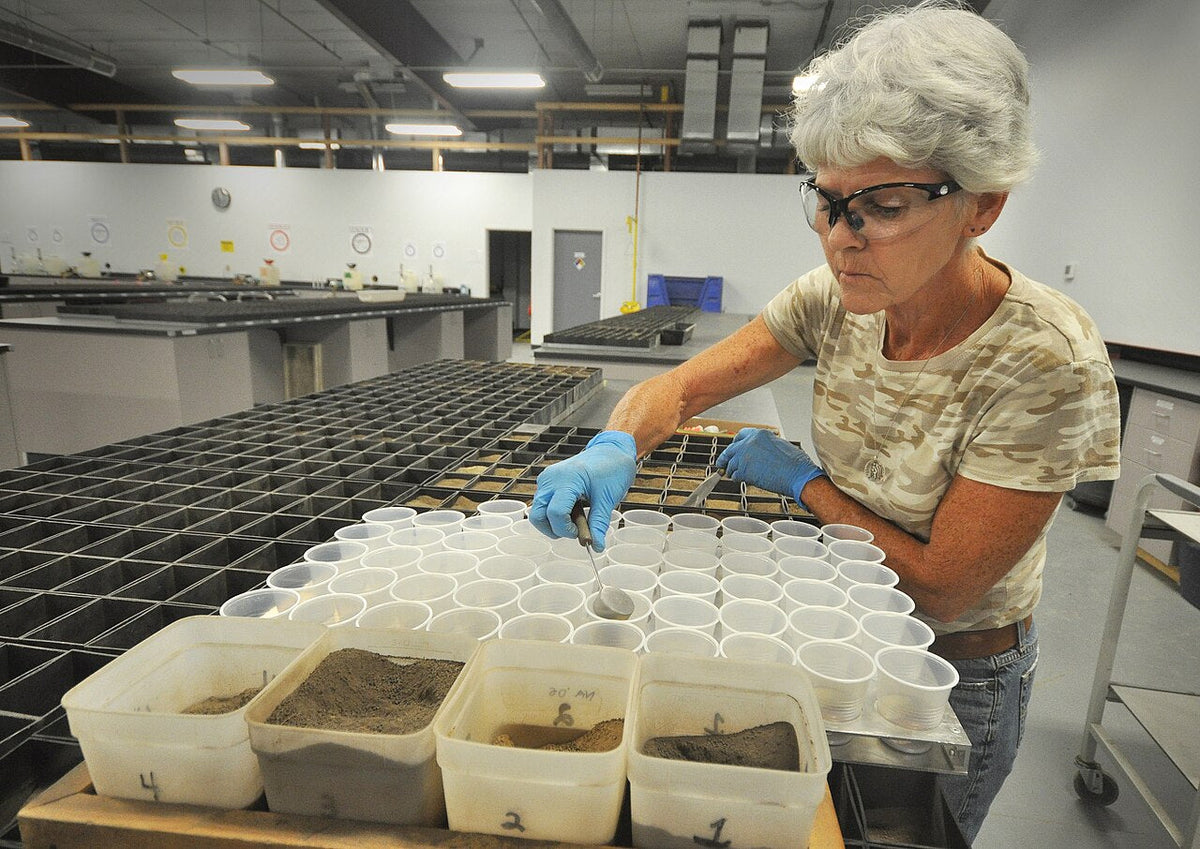
Photo at the top: Soil samples being measured out for nutrient tests in a soil-testing laboratory. A soil test tells you if sulphur is low before you sow, Photo: Ron Nichols, USDA NRCS, Public domain
Quick answer
Sulphur deficiency in plants means the crop does not get enough sulphur (S), a nutrient it needs to make protein and, in oilseeds, oil. The young, top leaves turn pale yellow first, while older leaves stay greener. Plants stay short and thin. Confirm it with a soil test and correct it with manure and a sulphur-containing fertiliser.
How to identify sulphur deficiency in plants
Sulphur is part of plant protein. It also helps the leaf make chlorophyll, the green colour that lets a leaf make food from sunlight. In oilseeds such as groundnut and mustard, the plant needs sulphur to fill seeds with oil. Oilseeds and pulses need more sulphur than cereals.
In Hindi, farmers call it गंधक (सल्फर) की कमी (gandhak ki kami). In Telugu it is గంధకం లోపం (gandhakam lopam).
The key sign is where the yellow starts. Sulphur does not move easily inside the plant. Once it is in an old leaf, the plant cannot send it on to new leaves. So when the soil runs short, the new leaves at the top suffer first.
Sulphur deficiency symptoms in leaves and plants
- Colour: young, top leaves turn pale green to yellow. The whole leaf turns yellow, veins included. Older leaves stay greener for longer.
- Growth: plants are short, with thin stems and small leaves. Cereals make fewer tillers.
- Crop: flowering can be late. Pods, panicles and cobs are smaller, and seed fill is poor. In oilseeds the oil content of the seed can drop.
- In the field: pale patches often show on light, sandy soils and in fields that get only urea, DAP and potash year after year.
Sulphur or nitrogen? How to tell them apart
Both make a crop look evenly pale yellow-green, so they are easy to mix up. Look at which leaves turned yellow first.
- Sulphur deficiency: the young, top leaves turn yellow first. The lower leaves stay greener.
- Nitrogen deficiency: the older, lower leaves turn yellow first, often from the tip, while the top stays greener. See our guide to nitrogen deficiency in plants and how to correct it.
This matters. If you add more urea to a crop that is short of sulphur, it will not green up properly. Extra nitrogen can even make the sulphur shortage worse, because the plant grows faster and needs more sulphur.
Other look-alikes
- Iron deficiency: also starts on young leaves, but the veins stay green while the tissue between them turns yellow. With sulphur deficiency the veins turn yellow too. Read more in our guide to iron deficiency in groundnut, paddy, chilli and tomato.
- Magnesium deficiency: older leaves turn yellow between green veins. See magnesium deficiency symptoms in cotton, groundnut and tomato.
- Zinc deficiency in paddy (khaira): rusty brown spots on the leaves and stunted, bushy plants a few weeks after transplanting. See khaira disease in rice and zinc deficiency in crops.
- Waterlogging or root damage: poor roots cannot take up nutrients even when the soil has enough. Pull out a few plants and check the roots.
- Virus: a mosaic pattern, curling or yellow veins on young leaves points to a virus, not a nutrient problem.
Causes of sulphur deficiency
Plants take up sulphur from the soil as sulphate. Most of the soil's sulphur sits in organic matter and is released slowly. A shortage usually has one of these causes:
- Low organic matter: light, sandy and red soils with little manure or crop residue hold little sulphur.
- Sulphate washes away: sulphate moves down with water. After heavy rain or heavy irrigation on sandy soil, it can wash below the roots.
- Fertilisers without sulphur: urea, DAP and muriate of potash supply no sulphur. Older fertilisers such as single super phosphate and ammonium sulphate did, and they are used less today.
- Heavy cropping: two or three crops a year with high-yielding varieties remove a lot of sulphur. If nothing is put back, the soil runs down.
- Hungry crops: oilseeds such as groundnut and mustard, and pulses, need more sulphur, so they show the shortage first.
- Cold, dry or waterlogged soil: soil microbes release sulphur from organic matter slowly, and roots take up less.
Sulphur deficiency symptoms by crop
Groundnut
TNAU Agritech describes groundnut plants short of sulphur as light green, stunted and evenly yellow, with thin stems and a spindly look. Because groundnut is an oilseed and a legume, it needs a lot of sulphur. A shortage can mean fewer, poorly filled pods.
Mustard
Mustard needs more sulphur than most crops. The integrated pest management package for mustard from NIPHM (the National Institute of Plant Health Management), shared on Vikaspedia, lists these signs:
- Symptoms show on younger leaves first.
- Yellowing starts at the leaf edges and spreads inward. Some leaves turn purple.
- Young leaves curl inward into a cup shape, then scorch and wither.
- Flowering is late, and flowers are pale.
- Pods sit on short stalks and stay small. Seed setting is poor and the crop matures late.
- Plants are short, with thin stems and small leaves.
Paddy (rice)
TNAU Agritech lists pale green younger leaves with dead, brown tips, fewer tillers and shorter panicles. In the field, sulphur shortage in paddy is easy to mistake for nitrogen shortage. Check which leaves turned pale first.
Maize
TNAU Agritech notes that the younger leaves of maize turn completely yellow, veins included. As in other crops, a sulphur-short maize plant stays short and thin, and its cobs are smaller.
When to act: soil test and field checks
There is no pest-style "threshold" for a nutrient. But confirm the cause before you buy fertiliser, because the look-alikes above need a different fix.
- Soil test: under the Soil Health Card scheme you can get your soil tested through your agriculture department or Krishi Vigyan Kendra (KVK). The report covers sulphur along with nitrogen, phosphorus, potassium and micronutrients, and gives a fertiliser plan for your crop.
- When to test: before sowing, so you can add sulphur with the basal (first) dose.
- How to take a soil sample: from 8–10 spots across the field, in a zigzag, dig a V-shaped pit to plough depth (about 15 cm) and take a thin slice from one side. Mix all slices in a clean bucket and send about half a kilogram. Do not sample near bunds, trees, manure heaps or fertiliser bands.
- Leaf (plant tissue) test: some labs can test the leaves themselves. Ask your KVK if this is available near you.
- Check the pattern: if the young leaves are yellow across the field and the soil is light, sulphur is a strong suspect. If only low, wet patches are pale, fix the drainage first.
Correcting it with organic sources
Organic matter is the soil's main store of sulphur. It releases sulphur slowly and keeps the soil healthy. Use it every season, together with fertiliser when the soil test shows a shortage.
- Farmyard manure (FYM) and compost: apply well-rotted manure before sowing or transplanting and mix it into the soil.
- Vermicompost: useful in vegetables, nurseries and small plots.
- Oilcakes: cakes such as neem cake and groundnut cake add organic matter and some sulphur.
- Crop residue: do not burn straw and stubble. Let it rot in the field or compost it, so its nutrients go back to the soil.
- Green manure: grow dhaincha or sunhemp before paddy and plough it in, as advised by your local agriculture office.
How to fix sulphur deficiency in plants
Soil application first
Soil application is the main way to correct sulphur. Put it in before sowing or with the first fertiliser dose, so it is ready when the crop grows fast. Follow the dose in your soil test report or your state's crop recommendation.
Common sources of sulphur are:
- Gypsum (calcium sulphate): gives sulphur and calcium. It is widely used in groundnut, where the pods also need calcium.
- Single super phosphate (SSP): gives phosphorus, sulphur and calcium. Using SSP in place of DAP for the phosphorus dose also supplies sulphur.
- Ammonium sulphate: gives nitrogen and sulphur.
- Elemental sulphur (including bentonite sulphur): soil bacteria must first turn it into sulphate before plants can use it. It acts slowly, so apply it well before the crop needs it.
- Zinc sulphate and magnesium sulphate: mainly used for zinc or magnesium, but they also add some sulphur.
Rates from public sources:
- Groundnut: TNAU Agritech gives soil application of gypsum at 200 kg per hectare (about 80 kg per acre) to correct sulphur deficiency.
- Mustard: the NIPHM mustard package on Vikaspedia gives gypsum at 100 kg per acre in the soil, or other sulphur-containing fertilisers.
For timing, and for paddy and maize, ask your local agriculture officer or KVK. Rates change with soil type and the sulphur level in your soil test.
Foliar spray: only a short-term fix
A leaf spray can help a crop that already shows the signs, but it cannot replace soil application. For rice, TNAU Agritech lists a foliar spray of 0.5% wettable sulphur (5 g per litre of water), two times, 15 days apart. For other crops, use only the strength your local agriculture officer or the product label gives. Too strong a spray can burn leaves. Spray in the early morning or evening, not in hot sun.
New leaves should come out green within one to two weeks if the cause was sulphur. Leaves that are already fully yellow may not recover.
Prevent it next season
- Test your soil before the next crop, and keep the report.
- Add manure, compost or residue every season.
- Do not rely only on urea, DAP and potash. Bring in a sulphur source at least once in the rotation, especially before groundnut, mustard or pulses.
- Rotate cereals with oilseeds and pulses, and give the oilseed its sulphur.
- Avoid heavy over-irrigation on light soils. It washes sulphate below the roots.
Safety
- Store fertiliser in a dry place, away from food, animal feed, children and pesticides.
- Wear gloves while handling fertiliser, and a cloth mask with dusty materials such as gypsum and sulphur powder. Wash your hands afterwards.
- Keep elemental sulphur away from fire and sparks. It can burn.
- Do not let fertiliser wash into ponds, canals or wells.
- Read the label and leaflet before use.
Frequently asked questions
What are the symptoms of sulphur deficiency in plants?
The young, top leaves turn pale green to yellow first, veins included. Older leaves stay greener. Plants are short and thin, with fewer tillers or branches, late flowering and poorly filled seed.
How is sulphur deficiency different from nitrogen deficiency?
Both make the crop pale. Sulphur shortage shows on the young, top leaves first. Nitrogen shortage shows on the old, lower leaves first. Extra urea will not fix a sulphur shortage.
Which fertiliser gives sulphur to plants?
Gypsum, single super phosphate, ammonium sulphate and elemental (bentonite) sulphur all supply sulphur. Zinc sulphate and magnesium sulphate add a little too. Manure and compost release it slowly. Your soil test report tells you which to use and how much.
Why do groundnut and mustard need more sulphur?
They are oilseeds. The plant needs sulphur to make protein and to fill the seed with oil. When sulphur is short, these crops show it first, and seed and oil both suffer.
Can I just spray sulphur on the leaves?
A leaf spray is only a short-term help for a crop already showing the signs. The lasting fix is a sulphur source in the soil before sowing, plus manure. Use only a rate from your agriculture officer, a university recommendation or the product label.
Related reading
- Nitrogen deficiency in plants: symptoms, causes and how to correct it
- Iron deficiency in plants: symptoms in groundnut, paddy, chilli and tomato
- Khaira disease in rice: zinc deficiency signs and correction in crops
- Magnesium deficiency in plants: symptoms in cotton, groundnut and tomato
- All fertilizers
- Products for paddy
Sources
- TNAU Agritech Portal, Tamil Nadu Agricultural University: Groundnut: sulphur deficiency
- TNAU Agritech Portal, Tamil Nadu Agricultural University: Rice: sulphur deficiency
- TNAU Agritech Portal, Tamil Nadu Agricultural University: Maize: sulphur deficiency
- Vikaspedia, from the NIPHM integrated pest management package for mustard: Mustard and rapeseed: nutritional deficiencies
- Soil Health Card scheme, Department of Agriculture and Farmers Welfare, Government of India: soilhealth.dac.gov.in
Like these farming tips? Add AgriVruddhi as a preferred source on Google
Back to Crop Health Guide