
Mango hopper: identify and control hoppers on mango flowers
· By AgriVruddhi
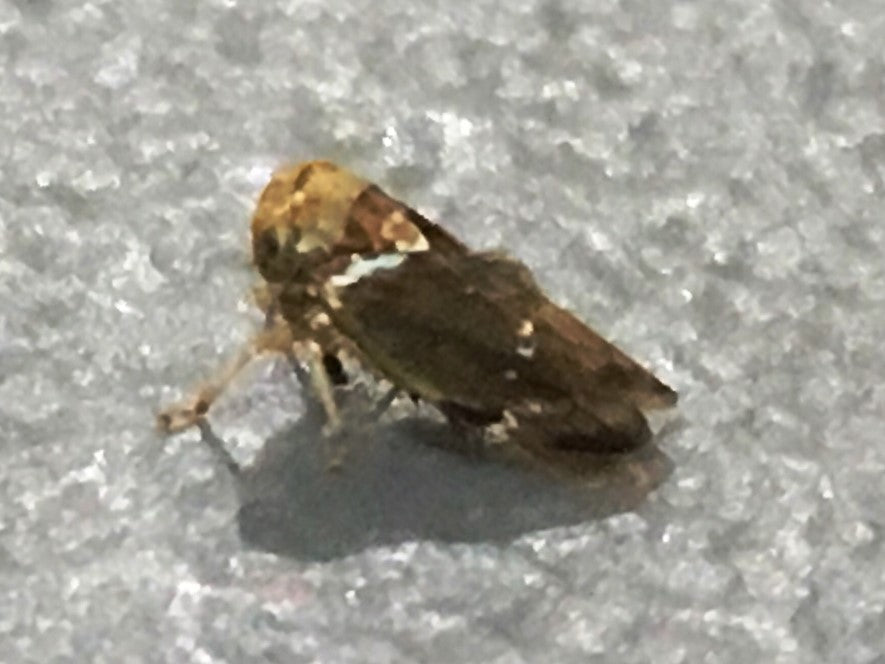
Photo at the top: An adult mango hopper (Idioscopus nitidulus): dark and wedge-shaped, with pale marks, Photo: Ann Lazaro, CC BY-SA 4.0
Quick answer
The mango hopper is a small, wedge-shaped insect that sucks sap from mango flower bunches (panicles) and tender shoots. Flowers dry and drop, fewer fruits set, and sticky honeydew turns leaves black with sooty mould. Keep the orchard open and clean, check panicles from the time they appear, and spray only when the count passes the threshold, with an insecticide whose label names mango hopper.
How to identify mango hoppers
In Hindi this pest is called aam ka phudka, and in Telugu mamidi tene manchu purugu. Three species do most of the damage in India: Idioscopus nitidulus, Idioscopus clypealis and Amritodus atkinsoni. They belong to the leafhopper family, the same family as the jassids of cotton and vegetables.
Stand under a tree in flower and shake a branch or a panicle. Hoppers jump off with a light clicking sound, fly a short way and soon settle again. Look at the panicle stalks, the young leaves and the cracks in the bark. The insects hide there.
- Adult: about 4 to 5 mm long, wedge-shaped, golden brown to dark brown. It looks like a tiny cicada.
- Nymph (young stage): pale yellow to greenish, with dark markings. It has no wings, so it cannot fly, but it runs fast. Nymphs hide on lower shoots and in cracks in the bark.
- Egg: too small to see easily. The female lays the eggs inside the soft tissue of flower stalks and tender shoots.
TNAU (Tamil Nadu Agricultural University) gives simple marks to tell the three species apart. Look at the small triangle-shaped plate on the back, behind the head.
- Idioscopus nitidulus (often printed as I. niveosparsus): dark, with wavy lines on the wings and three spots on that back plate.
- Idioscopus clypealis: small and light brown, with dark spots on top of the head and two spots on the back plate.
- Amritodus atkinsoni: large and light brown, with two spots on the back plate.
You do not need to know the species to act. All three damage the crop in the same way and are managed the same way.

Damage signs
- Flowers and flower buds wither, turn brown and fall. Whole panicles can dry up.
- Few fruits set, and small fruits drop early.
- Heavy feeding makes tender shoots and leaves curl and dry.
- Sticky honeydew falls on the leaves below. A black fungus called sooty mould grows on it, so leaves look black and dirty. Black leaves make less food for the tree.

Look-alikes and how to tell them apart
- Mango mealybug: flat, oval and covered in white powder. It crawls up the trunk and sits in groups on shoots and panicles. It does not jump or fly. See our guide to mealybug identification and control.
- Powdery mildew: a disease, not an insect. A white powder covers the flower stalks and flowers, and the flowers drop. You will see no insects jump off. See our powdery mildew guide for mango, chilli and grapes.
- Anthracnose (blossom blight): a fungal disease. Small black spots join up on the flowers and panicle stalks, mostly after rain or heavy dew. See anthracnose of mango, chilli and grapes.
- Inflorescence midge: tiny maggots bore into the panicle stalk, flowers and small fruits. You see small holes and dry, bent stalks, but no jumping insects.
- Aphids: soft, round-bodied insects that sit still in groups on tender parts. They do not jump. See our aphid guide.
Mango hopper life cycle and when it attacks
Hoppers live in the orchard all year in small numbers. They rest in the cracks of the bark and in the shade of the canopy. When the tree starts to flower, they move onto the panicles. The NIPHM (National Institute of Plant Health Management) package says females lay more eggs, and the young grow faster, during flowering and fruiting. Eggs hatch in 2 to 3 days. The nymphs become adults in 12 to 20 days. So numbers can build up fast during the flowering weeks.
An ICAR (Indian Council of Agricultural Research) review notes that numbers rise sharply from February to April, and again from June to August. Shade and high humidity help the pest. That is why old, neglected and closely planted orchards suffer most.
In Telangana and Andhra Pradesh, mango usually flowers from December to February. Start checking the trees as soon as the first panicles come out, and keep checking until the fruits are set.
Crops it attacks
Mango: this pest is a problem of mango orchards. The worst damage is at flowering, when panicles emerge and open. Sap loss at this time means fewer flowers and fewer fruits. Hoppers also feed on new leaf flushes.
When to spray (economic threshold)
The economic threshold is the pest level at which spraying starts to pay for itself. In the ICAR magazine Indian Horticulture (2021), H S Singh and Gundappa Baradevanal advise the first spray at early panicle emergence when there are more than 4 hoppers per panicle.
To count, choose several trees across the orchard. On each tree, look at panicles on all sides. Count the hoppers on each panicle, and also shake a few panicles over your palm or a white sheet to see how many jump off. Check once or twice a week during flowering.
Mango hopper control without chemicals
- Open the canopy: NIPHM advises pruning dense, overlapping branches after the rainy season and in December. More light and air means less shade and humidity for hoppers.
- Do not plant too close: TNAU and NIPHM both note that the attack is very severe in overcrowded orchards. Follow the spacing your KVK (Krishi Vigyan Kendra) or horticulture office advises for your variety.
- Keep the orchard clean: plough between the rows and remove weeds. NIPHM also advises removing other host plants near the orchard, such as hibiscus, custard apple and guava.
- Go easy on nitrogen: too much urea gives soft new shoots that draw more hoppers. Use fertiliser as per a soil test and the local recommendation.
- Protect natural enemies: small parasitic wasps attack hopper eggs. Green lacewings, ladybird beetles, spiders and assassin bugs eat the nymphs and adults. Fungi such as Beauveria bassiana also infect hoppers. Avoid sprays that are not needed, so these friends survive.
- Neem and bio-agents: TNAU lists neem oil and neem seed kernel extract sprays against hoppers, and ICAR also advises neem products. NIPHM lists Beauveria bassiana and Metarhizium anisopliae, applied on the tree trunk in the off-season and at flowering. Ask your KVK for a registered product and the right strength.
If you need to spray: choosing a mango hopper insecticide
We have not yet confirmed a product in our store whose current label names mango hopper on mango, so we do not suggest one here. Rules on which insecticides may be used on fruits that people eat raw have changed in recent years, so an older leaflet may not be up to date. Ask your local horticulture or agriculture officer, or your nearest KVK, for a product labelled for mango hopper. Use the dose, water volume and waiting period printed on that label.
When you do spray, a few points help:
- Time the first spray at early panicle emergence, once the count passes the threshold above. This also keeps the spray off fully open flowers, when bees and other pollinators are busy.
- Mango trees are large. Cover the panicles, the tender shoots, the leaves and the bark where hoppers hide.
- Use one product at a time. Do not mix products in one tank.
- Keep up the pruning and orchard cleaning. Sprays alone do not keep hoppers down year after year.
Rotate to avoid resistance
If you spray the same insecticide group again and again, hoppers stop dying from it. Insecticides are grouped by how they work, using the IRAC group number (IRAC is the international Insecticide Resistance Action Committee).
If a second spray is needed in the same season, use a product labelled for mango hopper from a different IRAC group. Your KVK can suggest one.
Safety and waiting period
- Check the label for the waiting period before harvest (PHI, pre-harvest interval). Mango fruit is eaten fresh, so count the days from the last spray before you pick.
- Wear gloves, a mask, goggles, full-sleeve clothes and boots while mixing and spraying. Spraying tall trees sends drift down on you, so stand upwind. Do not eat, drink or smoke while you work. Wash well afterwards.
- Bees: mango flowers need insects such as bees and flies to set fruit. Many insecticides are toxic to bees. Do not spray on open flowers when pollinators are working, and tell beekeepers nearby before you spray.
- Spray in the morning or evening, not in strong wind or hot afternoon sun.
- Fish: keep sprays and washings away from ponds, canals and wells.
- Read the label and leaflet before use.
Frequently asked questions
When should I spray for hoppers on mango?
Watch from the time the panicles come out. The ICAR advice is to spray at early panicle emergence when you count more than 4 hoppers per panicle. Spraying before full bloom also protects bees and other pollinators.
Why are my mango flowers drying and falling?
Hoppers sucking sap from the panicles is a common cause. Shake a panicle: if small insects jump off with a clicking sound, it is hoppers. If you see white powder, it is powdery mildew. If you see black spots after rain or dew, it is likely anthracnose.
Why are mango leaves turning black?
Hoppers drop a sticky liquid called honeydew. A black fungus, sooty mould, grows on it. The mould itself does not enter the leaf, but it blocks light. Control the hoppers and the mould stops spreading.
Which insecticide should I use for mango hopper?
Use only a product whose current label names mango hopper on mango. We have not yet confirmed such a product in our store, so ask your KVK or horticulture officer. Spray at early panicle emergence when there are more than 4 hoppers per panicle, as ICAR advises, and follow the dose and waiting period on the label.
Why do hoppers come back every year in my orchard?
They live in the bark cracks and shady parts of the tree all year. Dense, old orchards with high humidity suit them. Pruning to open the canopy and keeping the orchard clean lowers the numbers before the next flowering.
Related reading
- Powdery mildew fungicide guide for chilli, grapes, mango and wheat
- Anthracnose of chilli, mango and grapes: symptoms and control
- Mealybug: how to identify and control it
- Jassids (leafhoppers) in cotton, okra and brinjal
- Aphid insecticide guide
- All insecticides
Sources
- Tamil Nadu Agricultural University, TNAU Agritech Portal: Mango hoppers
- National Institute of Plant Health Management (NIPHM) and Directorate of Plant Protection, Quarantine and Storage, Government of India: AESA based IPM package for mango
- H S Singh and Gundappa Baradevanal, Indian Horticulture (ICAR), July–August 2021: Mango insect pests and their integrated management strategies
- Insecticide Resistance Action Committee (IRAC): Mode of action classification
Like these farming tips? Add AgriVruddhi as a preferred source on Google
Back to Crop Health Guide